
The worst-case scenario when encountering accuracy woes is when the gun itself is at fault because of manufacturing issues. Sure: we are regularly sending probes to the confines of the universe or landing them with millimeter accuracy hundreds of thousands of miles away on asteroids, but we are still humans working on and assembling these machines. Same goes for guns. We are not immune to purchasing a gun assembled by a distracted or sloppy employee which escaped the scrutiny of a careless quality controller. Like the billion-dollar probe crashing because somebody used the wrong unit conversion, the poor gun will not perform well because of humans and their rather imperfect nature.
Manufacturing related issues are not easy to fix and typically require a trip back to the factory or to a competent gunsmith. Tolerance issues, improper assembly, out of spec parts, and manufacturing mistakes can ruin a gun beyond possible repair. Manufacturers with good customer service will address the issue(s), quite often at no cost to the customer, at least for a while after purchase.
Sadly, some others may not be as accommodating, leaving the sleepless owner with ethical dilemmas like selling the gun for another unlucky and unsuspecting person to inherit the issues, or a long and onerous path to try to rectify the problem. At this point, I would suggest avoiding the sunken cost fallacy and cutting the losses as soon as possible. Fix the issue well but at the least cost possible. Then, enjoy the gun or sell it to recover some of your monies.
I have, unfortunately, experience in the matter. I owe it to a beautiful little Weatherby Vanguard II .243 Winchester I had bought as a birthday present for meself. This gun came with a sub-MOA three-shots guarantee, which it never achieved but once, by sheer statistical luck, out of a hundred groups. I tried everything: using the manufacturer’s recommended ammunition, tightening the action screws to the proper torque, taking the pressure points off and free floating the barrel, attaching a muzzle device to dampen the harmonics and trying several scopes in case one was defective. The best I could ever achieve were groups averaging slightly below 1.5 inch at 100 yards.
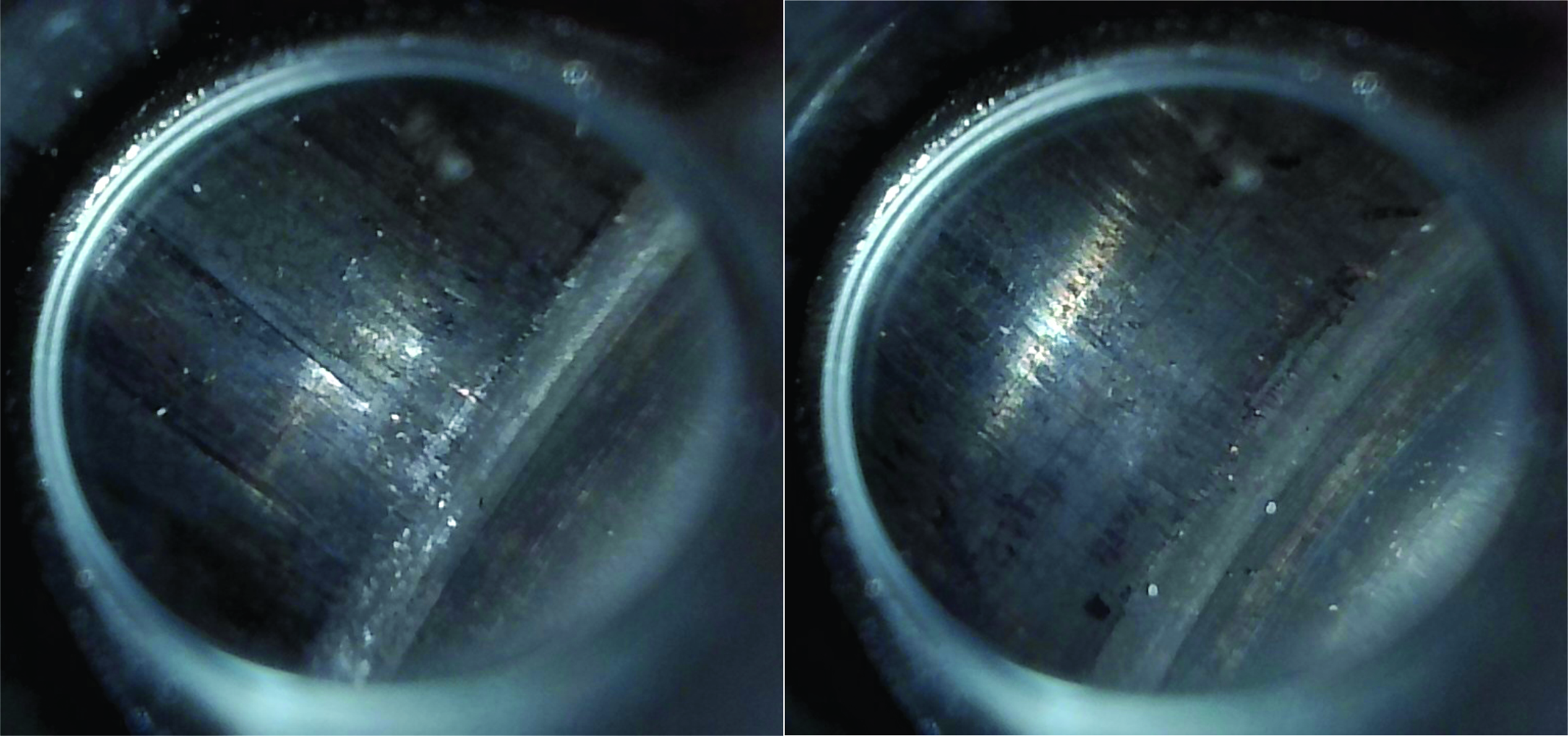
Such groups are adequate for hunting at close to medium range, but a far cry from the guaranteed accuracy, and certainly not what I wanted for the longer reaching gun I was hoping for. Turns out the chamber was bored off axis, leaving over a quarter of an inch without lands in front of the throat (lead picture of this post). The bullets could not travel down the bore properly aligned.
The rifle made a trip to the manufacturer who declared it was within specs and asked for $200 for test firing the rifle (which, in fairness, would be refunded if they were to find unacceptable accuracy). Soured, I declined and had them ship the accursed gun back. I ended up putting together some handloads that finally met the accuracy guarantee, but the charm is broken.
Some minor problems can be fixed by the owner. I bought a Ruger Blackhawk Convertible 45 Colt/45 AUTO during the post-pandemic time. It would pattern like a shotgun, especially with cast bullets: it suffered from tight throats on the 45 Colt cylinder and a barrel constriction where it was screwed to the frame. I am confident that a trip back to the factory would have resolved the issues, but I decided to try and fix these myself.
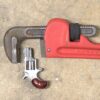
Under the guise of an educational project, I successfully reamed the throats and fire-lapped the constriction (look for article here: LINK). All is well that ends well: that gun shoots great now and I gained a bit of guncraft experience along the way.
Another problem that can be solved at home is a contact point between the stock and a free floated barrel of a rifle. This is fixed by carefully sanding or filing the area. Anything that requires shaving off metal from parts is best left to a qualified gunsmith, especially triggers and safeties. Don’t mess with them.
Exercise judgement with regards to fixing manufacturing related gun issues. Some can be taken care of at the work bench reasonably easily and without much risk to the gun and operator. Others have to involve professionals. As always, safety first. It is better to err on the side of caution, especially with guns. Saving a few dollars will not be worth it if catastrophe ensues.