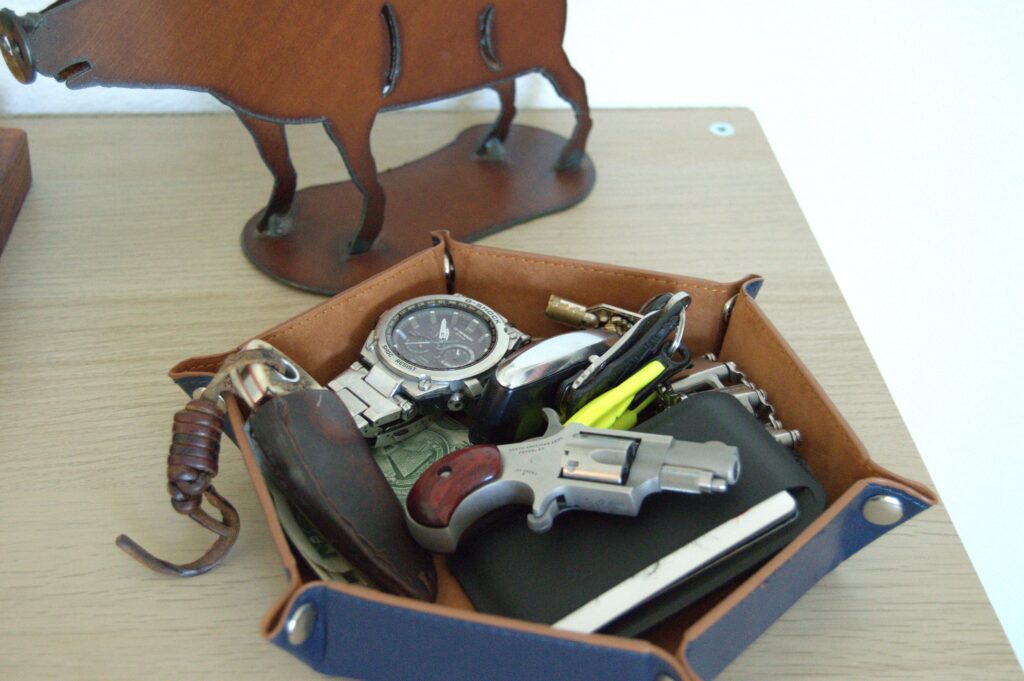
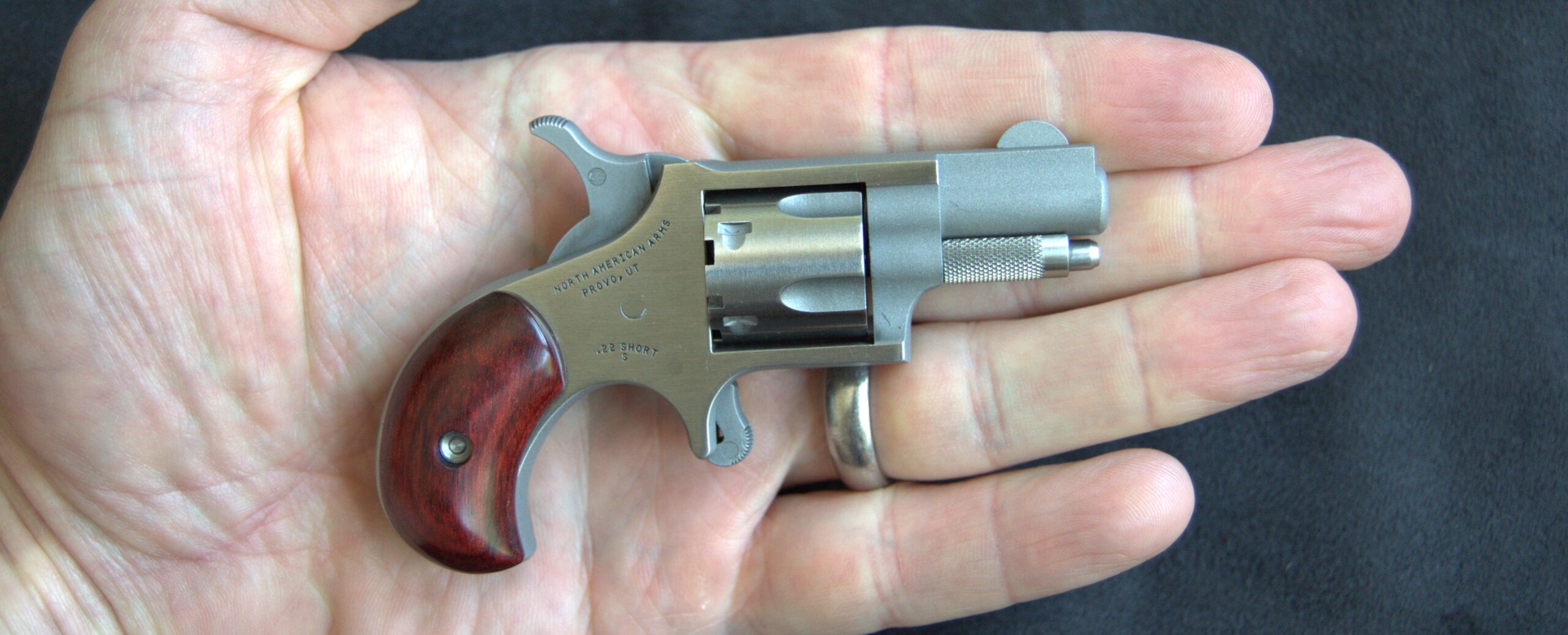
What if you could buy a quarter-pound elephant gun? I am indeed talking about a gun weighing four ounces and capable of humanely dispatching an angry elephant, but as long as the said pachyderm weighs no more than a few pounds, not tons. This is quite a caveat, and though science may surprise us by finding such a small proboscidean hidden in the undergrowth of a remote place, I doubt the critter may pose much threat. Still, the perfect gun for such an encounter and more exists. It is a handsome little piece of gunsmithing, with an affordable price and perhaps, for some skeptics, a debatable practical aspect: the North American Arms 22 Short, or NAA-22S for… …short.
The NAA-22S
The NAA-22S is a five shot single action made of stainless steel. It is part of a rather extensive family of rimfire single action revolvers that have a loyal following in the self-defense community for their diminutive size. These guns are easy to operate and conceal, and more than a few folks have one stashed somewhere on their person as a last-ditch gun. Good luck finding it, unless it is carried in their dedicated belt-buckle! The sheer variety of models, from convertible offers to top-break action, swing-out cylinders, cap-and-ball variants and barrels of all sizes deserves a whole article in itself. Unlike its brethren built for shooting 22 Long rifle or 22 Magnum, the NAA-22S is the only gun in the series that is chambered for the 22 Short. With its cylinder and frame tailored to the length of the wee little cartridge, it is without surprise the smallest of these revolver series and, to my current knowledge, the smallest handgun one can legally own in the US.
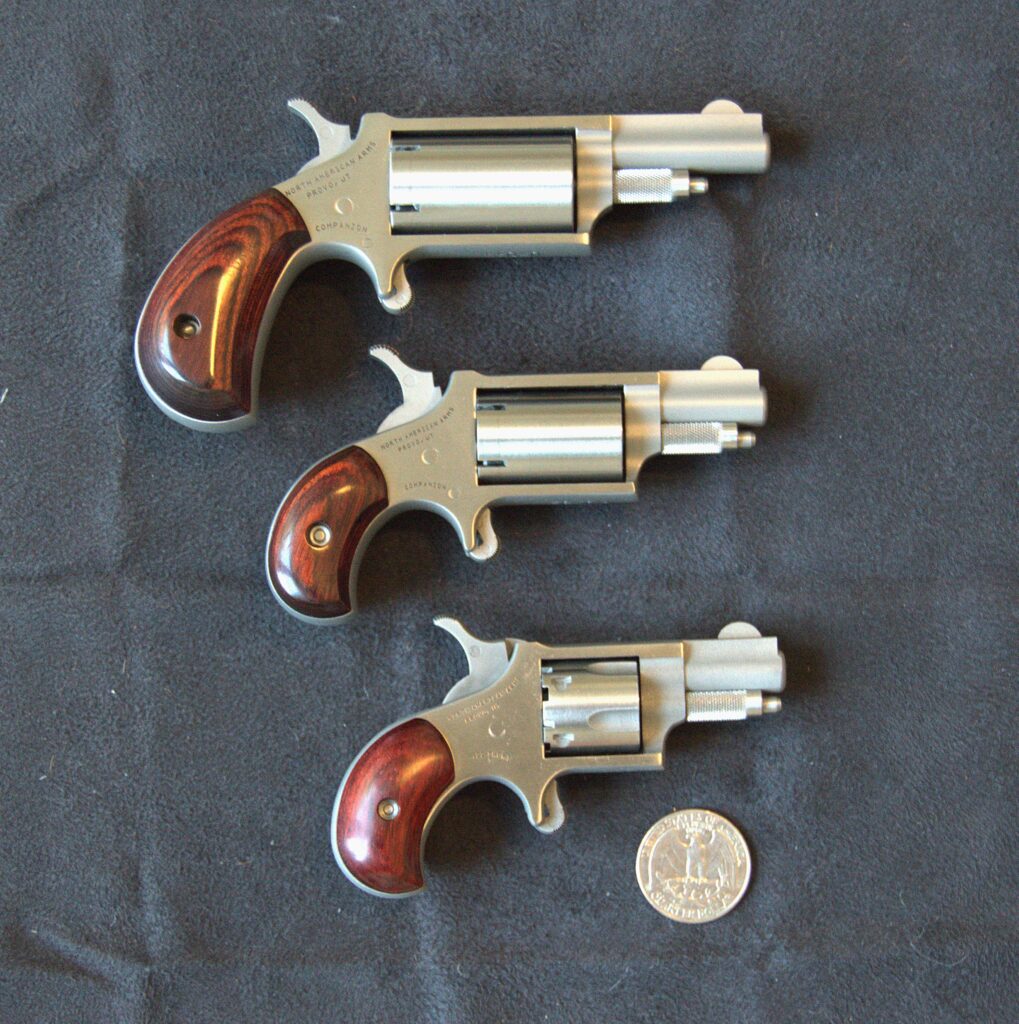
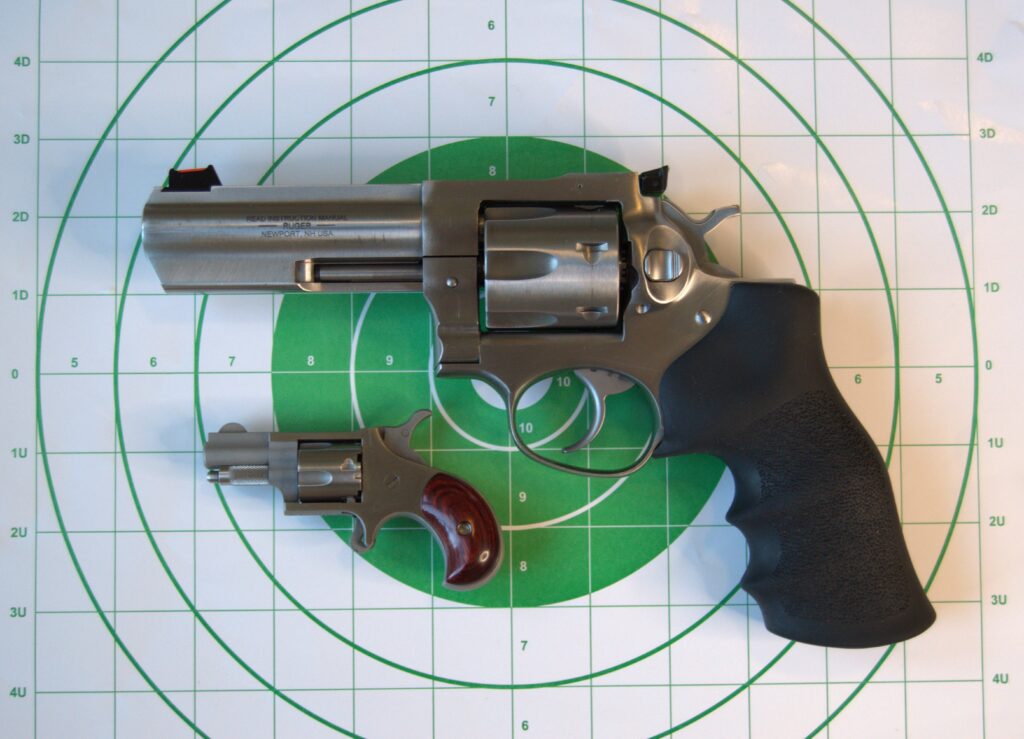
The NAA-22S is 3.63’’ long, 2.38’’ high and 0.88’’ wide, for a weight of 4 measly ounces. It sports a 1.13’’ barrel fitted with a half-moon front sight, the only aiming aid this little revolver possesses. Its small, one-finger bird’s head grip is flanked by plump rosewood panels that help hold on to the small gun surprisingly well. Its cylinder can hold 5 cartridges. It is notched between the chambers, allowing to lower and rest the hatchet-type hammer away from the exposed rims of the cartridge when carrying. This is the only “safety” feature on this gun. I am of the opinion that one cannot be careful enough, and I would recommend carrying this gun with the hammer lowered on an empty chamber, especially when carried in a pocket near important body parts like femoral arteries. The NAA-22S does not have room for a trigger guard. Rather, it has an exposed spur trigger that extends forward upon cocking the gun which is done by pulling the hammer fully to the rear. This action will rotate the cylinder counterclockwise, align the chamber with the bore and prop up the bolt into a cylinder notch to lock it before the eventual shot.
Loading and unloading the minute gun follows an unusual manual of arms, unique to these single action revolvers. After pulling the hammer back to half-cock, the user needs to depress and hold the button in front of the cylinder pin and pull the pin forward. This will release the cylinder that can then be pushed to the side and cleared from the frame. If spent cartridges are present, they can be pushed out of the chamber by using the cylinder pin. Up to five cartridges can then be inserted in the chambers, and the cylinder placed back into the frame. By carefully keeping the fingers clear of the muzzle, the cylinder pin can be reinserted through the frame and cylinder until the front button clicks, securing the loaded cylinder into the frame. The hammer can then be carefully lowered into a safety notch or onto an empty chamber by holding it while depressing the trigger, or pulled fully to the back for firing.
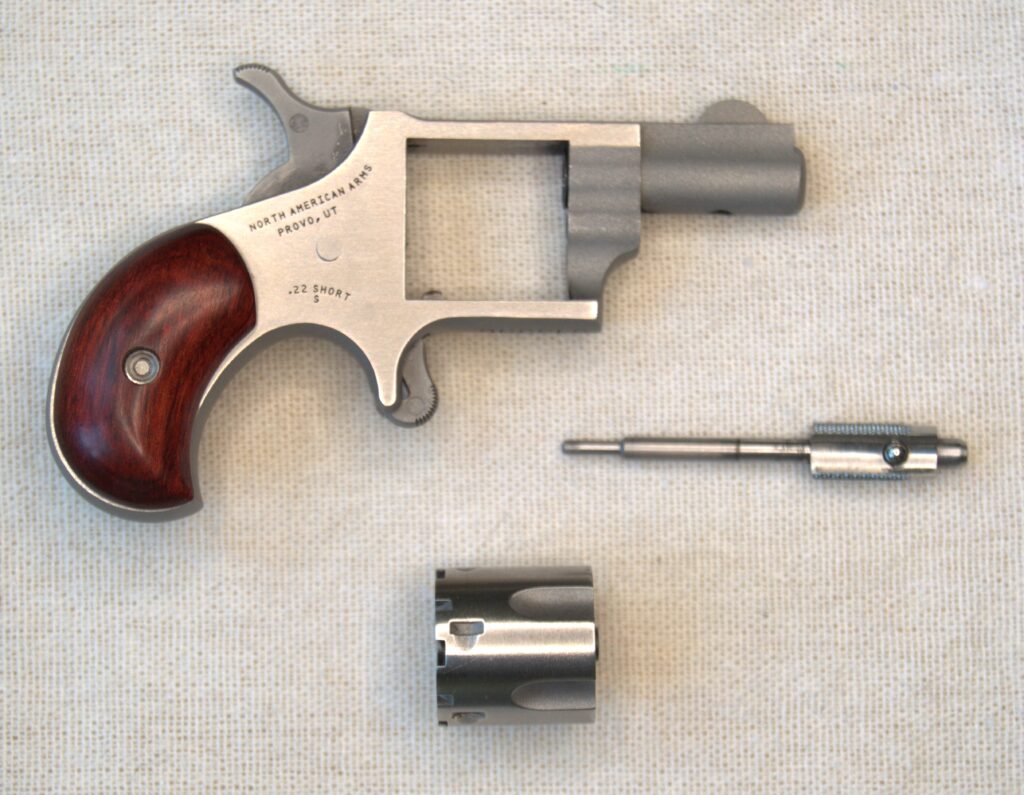
Other than its obvious puny dimensions, the most striking feature of this gun, like for all the North American Arms products I have seen, handled or shot, is its spectacular fit and finish. The craftmanship and quality control of North American Arms is some of the best one can encounter. Despite its relatively affordable price tag (some spices cost more than this gun per ounce!) and niche usage, it is evident that a lot of pride is taken into making this little gun. The radius of the cylinder and the sides of the frame are polished, and the action plate is seamlessly fitted, to the point the joint is almost invisible. The topstrap, grip, barrel, sight and cylinder lightening cuts all keep their bead blasted finish. The purpose is not only aesthetic but functional, minimizing glare and enhancing purchase, as it is currently in fashion saying.
A better mouse… …gun
Without any form of due process, this little gun falls directly in the “mouse gun” category, whatever this moniker implies. After all, it is the smallest handgun currently available for purchase in America. Mouse guns (is it mice guns?) generally refer to small, underpowered guns. In itself, the name “mouse gun” entails that these firearms are only suited for threats no larger than domestic rodents and should not be reasonably considered for anything bigger.
Since no proper definition was ever proposed, this classification is rather subjective. People used to hand-cannons may consider mouse guns some firearms that most others would not. I have seen the Ruger LCP lumped in the mouse gun category. Though its 380 ACP chambering will indeed dispatch mice effectively (and perhaps with more chutzpah than needed), I know of at least one law enforcement officer who carries it as his primary concealed weapon for two legged threats two thousand times heavier than the furtive critter.
Fears of the black plague and hantavirus spread by rodents aside, what is this unique gun good for? The direct practical application most will think of but will refrain voicing out loud is self-defense. Indeed, this idea is controversial when there is a plethora of more accurate and powerful handguns with much higher capacity. However, none are as small, and this is where the NAA-22S cannot be beat: despite its low capacity and lower power it is the easiest gun to carry concealed. It is so small that no average person would expect the little lump they barely see in your pocket to be anything else than your keys, let alone a fully functional revolver.
I doubt any serious expert would advise to solely rely on this gun as a primary self-defense gun and I will not either. However, there is no reason why it could not be used as a quasi-invisible back-up gun for up-close threats, or when or where no other gun could be legally carried. As the old trope goes and despite its less than stellar power, it beats throwing rock and harsh language. Ultimately, and speaking of last-ditch effort, one can always close their fist upon the empty gun and turn it into a rather efficient impact weapon…
The 22 Short of it
The obvious limitation of this gun lies within its rather low power and practical accurate range. Because few guns chambered for the 22 Short are in production and because the 22LR nudged its ancestor out of the limelight, people forget that the little rimfire cartridge is surprisingly potent when shot out of a rifle. However, it loses a lot of its energy coming out the stubby spout of the NAA-22S after passing its barrel gap. There is no way around this.
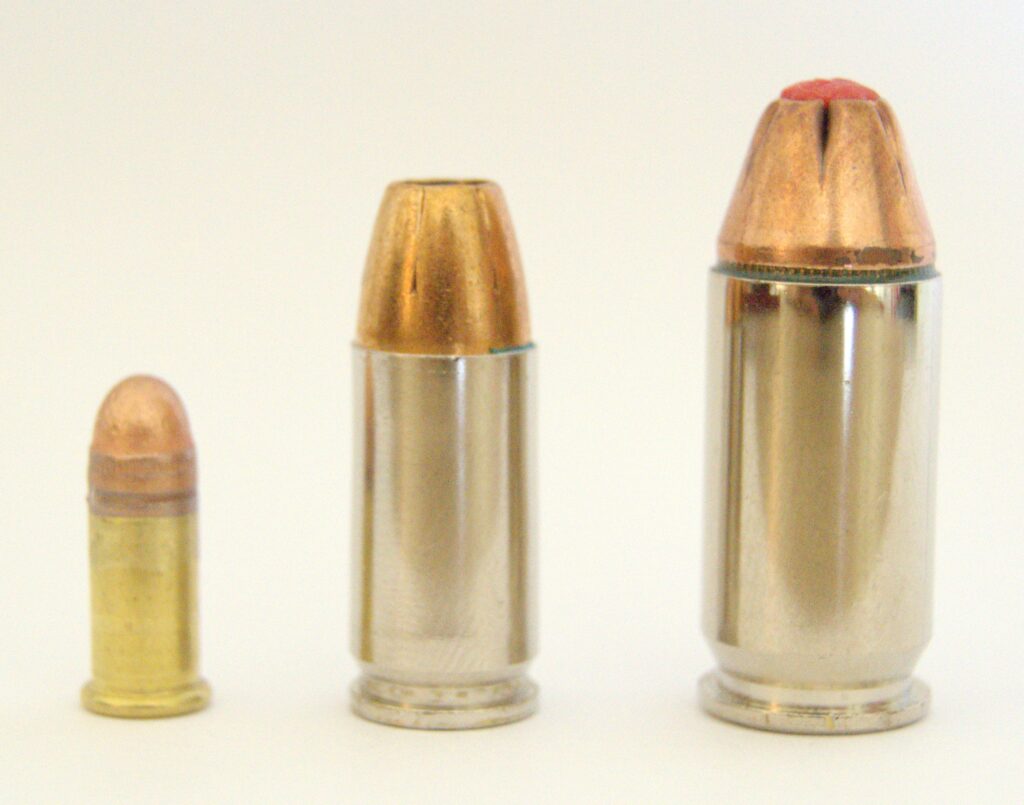
Factory tests with 29 gr Winchester Super X ammunition show a 702 fps median velocity for almost 32 lbs-ft of energy at 8’. This is perhaps the least amount of muzzle energy available out of a modern smokeless handgun. According to North American Arms factory tests, the 22LR version with the same 1.13’’ barrel can reach up to 47 lbs-ft of energy at 8’ or 48% more energy than the 22 Short. For comparison, the legendary Baby Browning in 25 ACP, often regarded as the father of all mouse guns, has almost twice as much muzzle energy with 65 to 70 lbs-ft.
These are all low numbers by all accounts, and certainly none we are used to seeing in any articles, at least regularly. How does this translate in a way that does not require to be shot at to comprehend? A kinetic energy of 32 lbs-ft is equivalent to an average 8-ounce hammer swung at 64 feet per second, or 43.5 miles per hour. Adding more perspective to that: all this impact energy is concentrated on a .224’’ diameter round nose bullet. Nobody would agree to be hit anywhere with a hammer at that speed, let alone condensed onto a tiny surface. Put like that, the puny 22 Short and its measly level of energy does not look that insignificant anymore.
Truthfully, theoretical calculations and external ballistics rarely directly translate into real life terminal ballistics. This has to do with how the bullet transfers its kinetic energy into the target. After all, if the 22 Short had a well-supported reputation of stopping threats, the 9mm Luger may not be as popular as it is.
Deterrence is an important aspect of preventing or stopping an attack. In terms of surprise, this revolver takes the cake as it can be hidden in even the closest fitting garments. Nobody in their right mind would volunteer to be shot, and even the lilliputian NAA-22S may stop an attack by just suddenly entering the bag guy’s field of view and throwing off their OODA loop.
Sadly, not everybody is in their right mind; if they were, they would not be pursuing life of crime or violence. If intimidation does not work, stopping the attack requires the incapacitation of the threat or their ceasing through pain and fear. The 22 Short cartridge, in a short-barreled revolver, will likely have a harder time to quickly incapacitate a threat compared to any other chamberings. Its light, small caliber bullet combined with its slow speed will not disrupt as much tissue along its path than other larger and more potent cartridges. It can, however, penetrate more than one would expect, with 8 inches as a reported average in ballistic gel and its bullet tumbling as an added bonus. While this is well short of the FBI standard minimum, it can be enough to reach into vital organs of an average human being and create a lot of issues upon arrival. It just may take longer than for other cartridges.
When not dealing with malicious rodents, mouse guns are often referred to as a “belly guns” or “get off me guns”, ones that the user reportedly presses into the threat’s stomach or body before firing point blank… One can easily imagine this last-ditch maneuver as efficient even with such a gunlet. A bullet followed by a cartridge-full of hot gases blasting through one’s chest, side or eye socket should make most threats reconsider their life choices, albeit perhaps a bit too late. The little NAA-22S might not be the first and best defensive option, but it may be most welcome when all else fails at a few paces or at bad-breath distance.
At the range
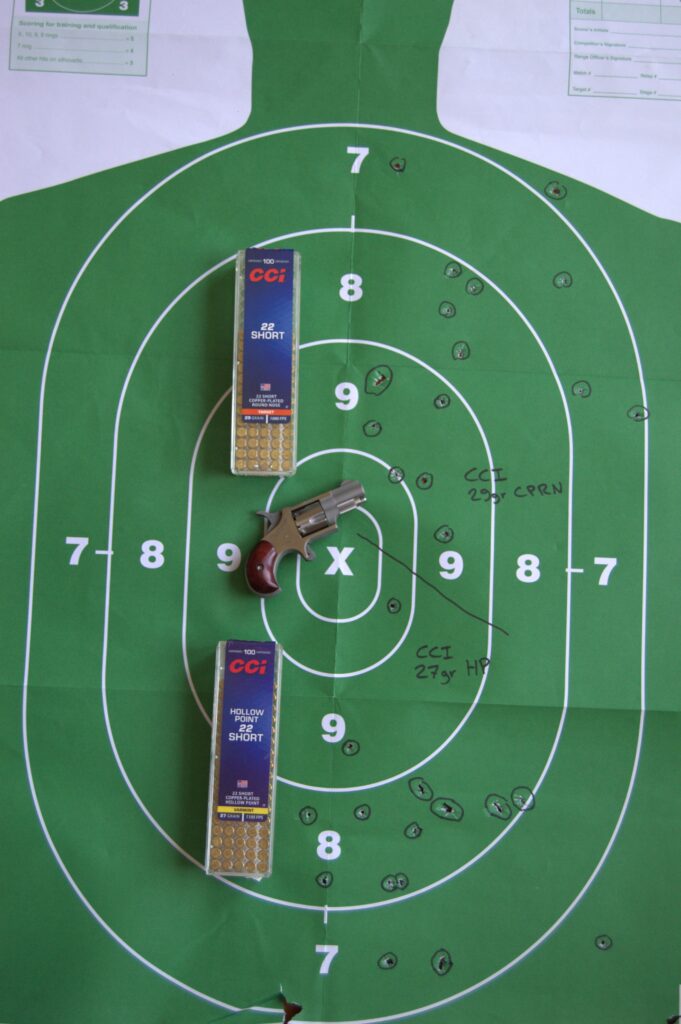
How does one test such a unique gun? Its chambering, diminutive size and simple sight do not scream long range shooting nor minute of angle accuracy. Since this gun is obviously designed for close range encounters, a full-size silhouette target was set up at 7 yards, the closest distance allowed at my local shooting range. The point of aim was the center mass, to test the gun’s practicality in dealing with human threats.
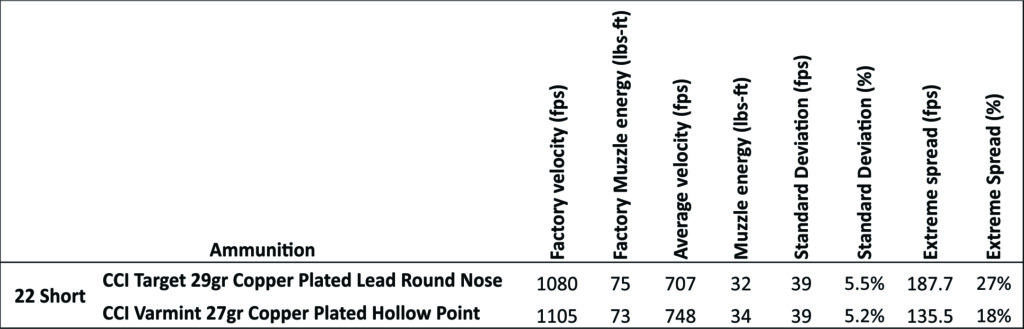
Two types of 22 Short ammunition were used for this test: the CCI 29gr Round Nose Target with an advertised velocity of 1080 fps and the CCI 27gr Hollow Point Varmint with a 1105 fps advertised velocity, both measured from rifle length barrels. As expected, when fired from a cylinder through a barrel gap and in such a short barrel, the velocity difference between the factory numbers and this gun is significant. The CCI 29gr Target fell right within the number of the NAA factory ballistics test with an average of 707 fps and 32 lbs-ft of energy. The CCI 27gr Varmint load clocked in faster with an average of 748 fps resulting in a small increase in muzzle energy with 34 lbs-ft. To my surprise, the standard deviation numbers are not out of some of the rimfire ammunition range I have encountered. However, the extreme spread numbers clearly show the influence of the small gun’s construction on velocity consistency compared to longer barrel rifles. One bullet of the CCI 29gr Target load and four of the CCI 27gr Varmint load left the barrel tumbling and struck the target sideway, leaving the telltale keyhole tear in the paper. While this is not a long-distance gun, this is worth noting and certainly would impact the terminals ballistics of these bullets, pun certainly intended.
The gun had a few failures to fire on the first cylinder. After these initial five shots, only one other failure to fire was experienced in the remaining 25 shots of the test. The round fired after rotating its rim, pointing at a rimfire priming issue. I will take partial blame for the initial failures to fire: I did not lubricate the gun prior to shooting, and it came bone dry from the factory. Also, my grip and technique might not have been correctly adjusted for this initial cylinder. After a couple of strategically dispensed droplets of oil, the gun’s action is noticeably smoother. Its hammer strikes now leave deep indentations on the rims of the cartridges and I expect no more failures to fire, other than for possible ammunition related issues.
Shooting this puny single action was neither as difficult nor as awkward as I would have thought. The thick paneled single-finger bird’s head grip is wide enough to allow my hand to close around it with a firm hold. Using a two-hand grip, the gun is easily steadied. Despite the absence of a rear sight or notch, I did not find aiming down its single front sight problematic at seven yards. Lacking any instructions, I tried two aiming techniques: aligning the topstrap and barrel rib parallel with the target, and aligning the front sight with the blade of the hammer much like using the hammer notch of a Colt 1851. The first technique is the correct one: the shots landed at the point of aim (center mass). Aligning the front sight with the hammer on the center mass dropped the shots into the pelvic zone. All my shots grouped 3’’ to the right, as a direct result of my trigger pull. The small grip has my index finger squeezing the small trigger with my second phalange, pulling the nose of the gun to the right upon shooting. This is easily corrected through practice and should not be of much concern at a couple of paces’ distance.
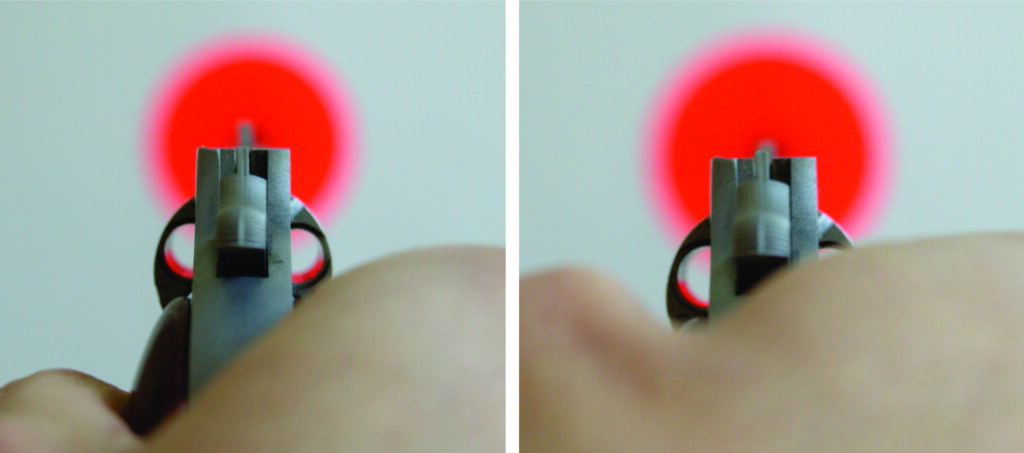
The NAA-22S is very light, and despite firing a small cartridge, it is lively in the hand upon shooting. The backward-directed recoil is non-existent, but the gun will roll up in the hand. Its bird’s head grip effectively keeps the gun into the hand by rotating around the gripping middle finger like a hook. To my initial surprise, the revolver will torque to the right, as would be expected from its right-hand rifling.
The gun is surprisingly louder than I anticipated, owing to the gases escaping from the barrel gap at peak pressure and the powder still burning outside of the barrel. Like eye protection, ear protection should be worn at all time firing guns. This gun is no exception despite its deceptive size: though nowhere near any concussive sound level, its sharp snap will damage hearing. Also, when shooting the gun two-handed, the shooter should pay attention to keep any finger away from the front of the cylinder, which is easy to forget due to the exceptionally small size of the gun. I experienced a minor amount of soot blowing back, especially on my trigger finger, from the proximity of the barrel gap and muzzle with my hand.
One important aspect of this gun should not be omitted: its utter fun factor. Bigger, cool guns with movie-worthy features, hush-hush sounds or car-flipping muzzle energy get all the attention, but this little guy is a pocket sized barrel of monkeys. After the initial familiarization with this spunky little revolver, I expect their owner, like me, to take it to the range more often than not and challenge themselves into shooting smaller and smaller groups and/or extending the distance to their target in front of bewildered audiences. This small and unusual little gun will force the shooter to mind their technique and can help improve the basics while enjoying a good time punching paper without fatigue.
My take
Novelty factor put aside, this little handgun deserves some legitimate interest. Its sturdy construction and impeccable finish will last a lifetime and more and will please the eyes of the most discriminant person many generations from now. Its operation and manual of arms is as simple as it gets, and its degree of accuracy well within practical expectations.
The NAA-22S certainly is a niche gun. It is most concealable, and lighter than an average key ring with a car fob attached. Nearly undetectable, this tiny gun will offer the element of surprise, or a last-ditch option in a self-defense scenario when all else fails. For this use, the owner will do good to test and maintain the gun well and verify its reliability at the range extensively. Through practice, the range of this tiny revolver can be extended well beyond arm’s reach close encounters.
For self-defense use, in terms of kinetic energy, the two tested 22 Short loads reached about a tenth of the muzzle energy of an average 9mm Luger load shot from a 4’’ barrel. This is nothing impressive but still represents enough kinetic energy to inflict significant trauma with well-aimed shots to vitals. The 22 Short has long ceased to be used for defensive purposes. However, for the past few years, the 22LR market for self-defense loads has developed tremendously. The prospective buyer may direct their interest towards the 22LR or 22WMR options offered by NAA. These may offer an increase in reliability and effectiveness compared to the 22 Short, albeit at the cost of a small increment in size and price.
This handsome little five-shooter is an affordable gun that punches surprisingly above the unfairly low expectations of its class. It is immensely fun to shoot at the range and possibly the most concealable last-ditch gun in current production. Despite its low power chambering, it may be able to dispense some much-needed lbs-ft at the most critical moment, no matter how few. Lastly, it will indeed fend off aggressive mice with authority, if it ever comes down to this. You never know.