
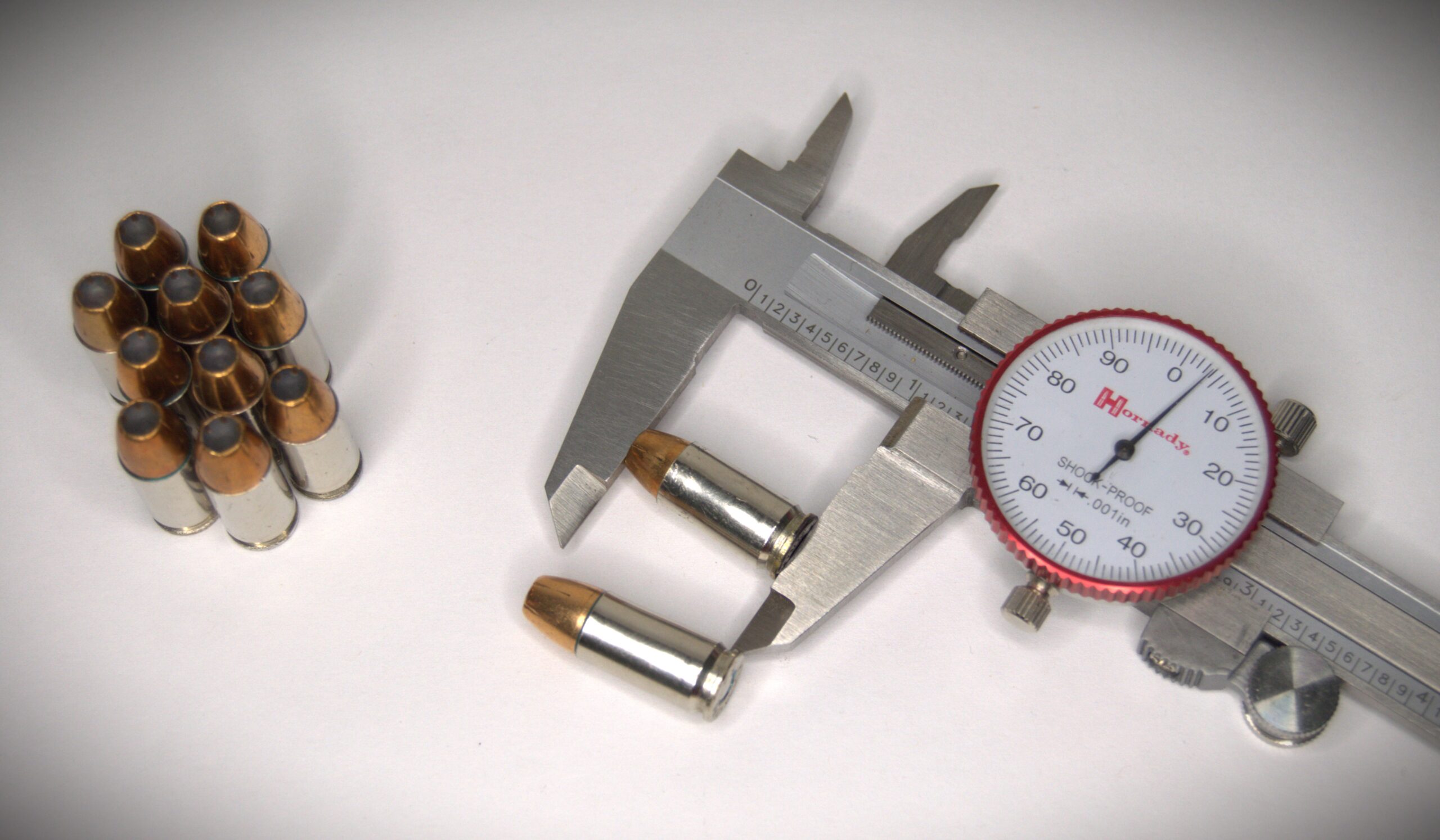
More than a few gun owners carrying for their personal defense unload their firearm(s) when at home, before securing it out of reach of people who should not be able to access it. I will not be discussing or arguing for or against the practice of keeping a gun loaded and ready to put into use here. The gun owner is an adult and, I would like to think, reasonable. They weighed the pros and cons of this practice against all the involved parameters. They made an educated decision involving social and family settings, local legal demands and/or other impactful factors.
Loading and unloading a semi-automatic pistol involves regularly cycling and extracting a cartridge, possibly once or several times a day, with, generally, the same cartridge doing the dance. Some models or types require the round to be chambered from a magazine to avoid stressing the extractor into increased wear and tear. Some others will happily close their action on a cartridge dropped into the chamber.
By the way of repeated slamming into the chamber by the closing of the action and subsequent pulling out of the chamber during clearing of the gun, the cartridge may start developing dimensional changes, the most common being a shortening of its overall length.
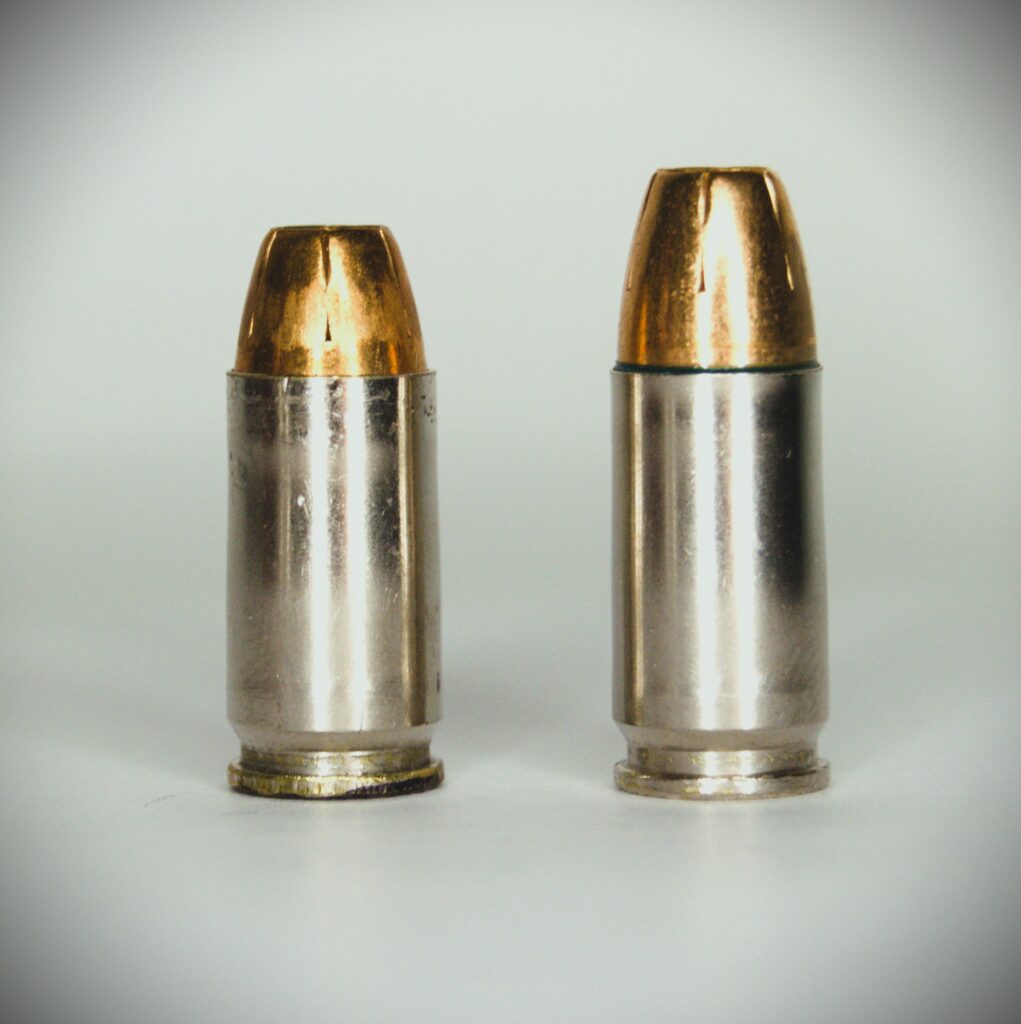
Semi-automatic pistols are quick cycling, and the cartridges are not treated gently during the fast closing of the actions. With time and repetition, the quick bursts of acceleration followed by the sudden stop during the chambering act like a reverse inertia bullet-puller and the bullet gets moved back into the case. Over time, if a gun owner does not pay close attention, the cartridge will keep shrinking to comical, and potentially dangerous proportions.
The problem
Smokeless powder is made of explosive compound(s) that are mixed with chemical retardants meant to spread the highly energetic chemical reaction over time, so that the energy release is gradual and controlled. When burning in a confined environment, the chemical reaction becomes increasingly fast as the pressure builds up: the powder burns, creating gases which increase the pressure in the confined space, increasing burn speed, and so on.
In a case topped with a bullet in a firearms chamber, the movement of the bullet down the bore increases the volume offered to the gases for expansion. Depending on each cartridge, projectile geometry and weight, the burn rate is carefully adapted to give the maximum yield of safe pressure and velocity.
Anybody into handloading knows it is safe practice to decrease the powder charge when increasing the seating depth of a bullet (= decreasing internal volume of the case) for a specific recipe. This is especially true for pistol cartridges which have fast burning powders and smaller internal capacity compared to larger bottleneck cartridges.
Ammunition manufacturers spend a good deal of research on finding the best and safest combinations. They have the resources to tailor their powder specifically to the bullet to give it maximum velocity, which often means getting a maximum filling of the internal capacity of the case with a special powder that will reach, but not go over, the maximum average pressure for that cartridge (MAP). When such carefully crafted ammunition gets shortened by repeated cycling, the internal volume of the case changes, and pressure will increase, possibly much more than for what was originally planned.
Then what?
Most modern handguns are designed and proofed to withstand pressure excursions, though there may be a point where this is too much. Excessive pressure may reach above what the case and primer can take: primers may get pierced or blown, with high-pressure gases back flowing into the action, potentially creating a dangerous situation for the shooter.
In extreme cases, the case may rupture, releasing the gases into the action of the firearm, with potentially catastrophic consequences for the shooter and eventual bystanders. Should the pressure be too much for the firearm, it may break and send flying pieces and debris around at high speed.
While these catastrophic scenarios are a possibility, the likely outcome of a slightly overpressured round is that the action will cycle too fast, resulting in a failure to feed, a stuck slide, or any other malfunction that could disable the gun for a quick successive shot. While this might not be too big of a deal at the range (and certainly preferable to the gun exploding), this can have dramatic consequences if this happens during a defensive situation.
How much pressure are we talking about?
A few years of carrying and cycling ammunition in a Glock 48 resulted in 11 rounds of a same 9mm Luger ammunition that showed significant shrinkage. The Glock 48 and its extrnal extractor safely allows the chambering of a round by dropping it into the chamber before closing the action. As a side note, I have never experienced shrinkage with my Garrison 1911 or SA-35 (Hi-Power Clone) which require chambering from the magazine.
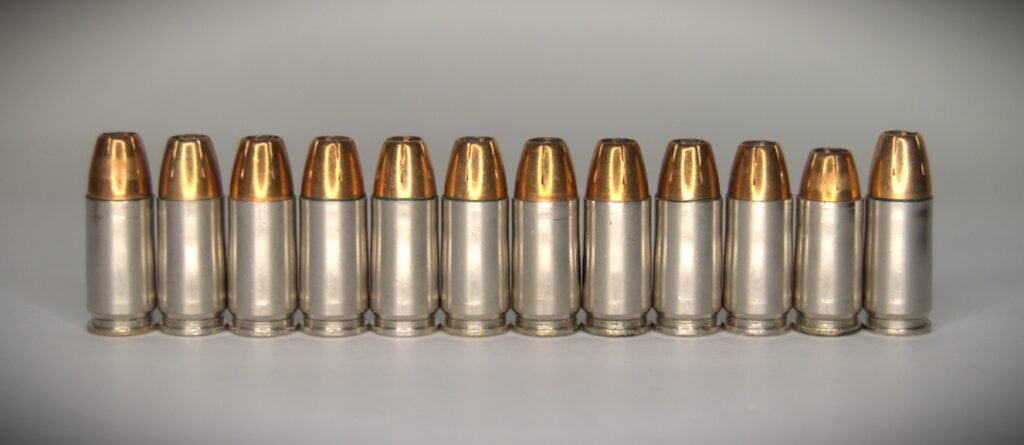
Chambering the +1 round in the Glock was always done with the gun held vertically with its muzzle pointing to the ground. Ejecting the round was always done gently by retracting the slide to open the action and disengaging the round from the extractor with a finger, with the round falling about four inches onto the foam of the lock box.
No ding against that excellent handgun: the Glock 48 is a wonderfully reliable pistol which never gave me any kind of grief whatsoever. I can only hypothesize that the sudden and sharp impulse of the slide closing it the culprit of the shrinkage.
From my observations (which obviously cannot represent the whole array of possibilities), the reduction of cartridge overall length (COAL) happened suddenly, without gradual indications. The cartridge would go into the chamber with a normal length and get ejected with a much shorter OAL. Since there is no way to look at the round while it is inside the chamber, there is no way to detect a sudden shortening of the OAL until the round is out of the chamber. These premium defensive cartridges having sealed case mouths, one can surmise that the shrinkage happened once the adherence of the sealant was finally whittled down by the repeated chamberings.
I measured these 11 shortened rounds with a dial caliper. The results are presented below. The factory COAL is 1.100’’. The least amount of measured shrinkage is 1.087’’ for 1.2% of the nominal COAL, and the most is 1.004’’ for some 9.3% of shrinkage!
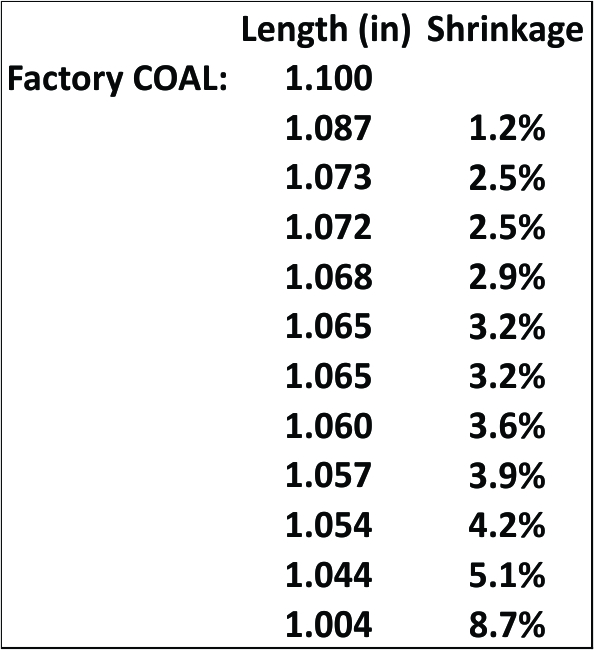
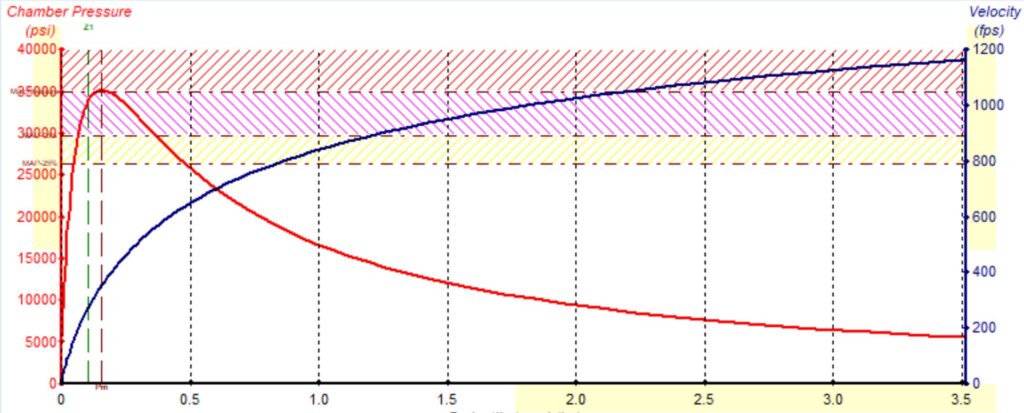
Shrinkage will reduce the internal volume of the case, changing the burning curve dramatically. As an experiment, I used the QuickLoad software to run a pressure simulation for popular 9mm Luger load using Hornady components and recipe. NOTE: always follow manufacturer’s recipes and guidance and never exceed published maxima. This is a theoretical simulation, not real-world measurements.
In this simulation, this load yields a 1,166fps velocity for a 4’’ barrel according to the software, a typical velocity for that bullet weight in quality ammunition. The given COAL overall length for the 124gr. XTP is 1.060’’, and I used the maximum safe powder weight for Power Pistol (5.7gr.), which corresponds to a 110% (compressed charge). The output is just a pinch above the 35,000 psi Maximum Average Pressure of the 9mm Luger, with 35,171 psi (0.4% over MAP).
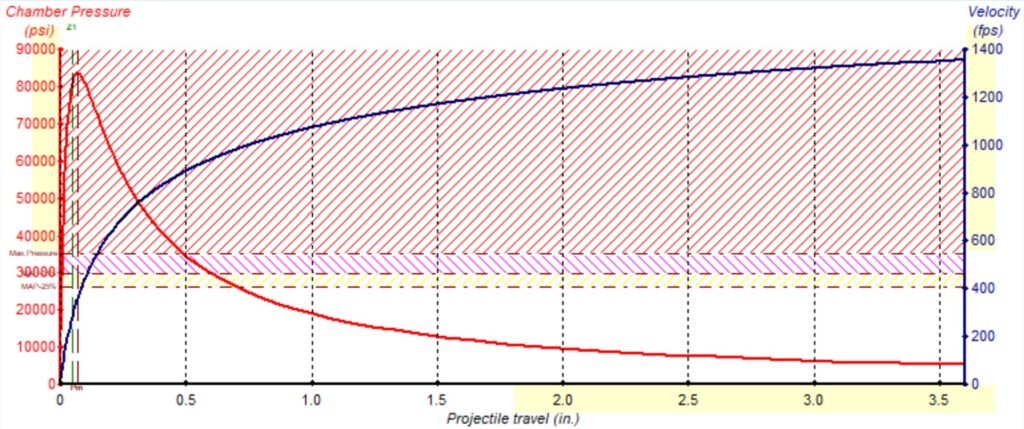
The same load model using a 9.3% reduction in COAL (0.975’’) would spike the pressure to a staggering 83,675 psi, or 239% more than the SAAMI MAP. This pressure is above the resistance threshold of brass, meaning that that the case would likely deform and fail, releasing the gases into the gun (the primer, meant for the 35,000psi MAP, would also likely fail at such pressure). While no one can say for sure if this could destroy the gun, this pressure is certainly well above any 100% strength contingency, possibly resulting in a dangerous situation for the shooter, especially if this happens in a defensive engagement.
Granted, this is just one simulated load, with one type of powder and components and there is no way to tell how the multitude of existing loads would behave when significantly shortened and compressed. However, it is very likely that this could result in potentially dangerous pressure increase, which in turn could lead to possible failure to cycle up to the destruction of the gun and injury to the shooter at the worst moment possible.
The moral of the story
There are semi-automatic pistols that will never clobber their ammunition into stumpy little rounds because of the way they are made and their action cycles. On the other hand, there are guns that will bludgeon the +1 round into the chamber with enough pent-up aggression or enthusiasm that it could shorten the cartridge significantly, and seemingly at random. From my observations on a single gun, this may happen at once, with no gradual indication.
Gun owners carrying such a slap-happy pistol and who cycle their ammunition should pay extra attention to the chambered cartridge and rotate ammunition regularly to avoid shrinkage. While this is good advice for anybody (the obvious: go to the range and practice with your defensive ammunition), this may be particularly critical if your handgun has the tendency to shorten its ammunition upon repeated chamberings. Heaven forbid one has to use their gun for their defense, but especially were it to malfunction or spontaneous disassemble when needed the most.