
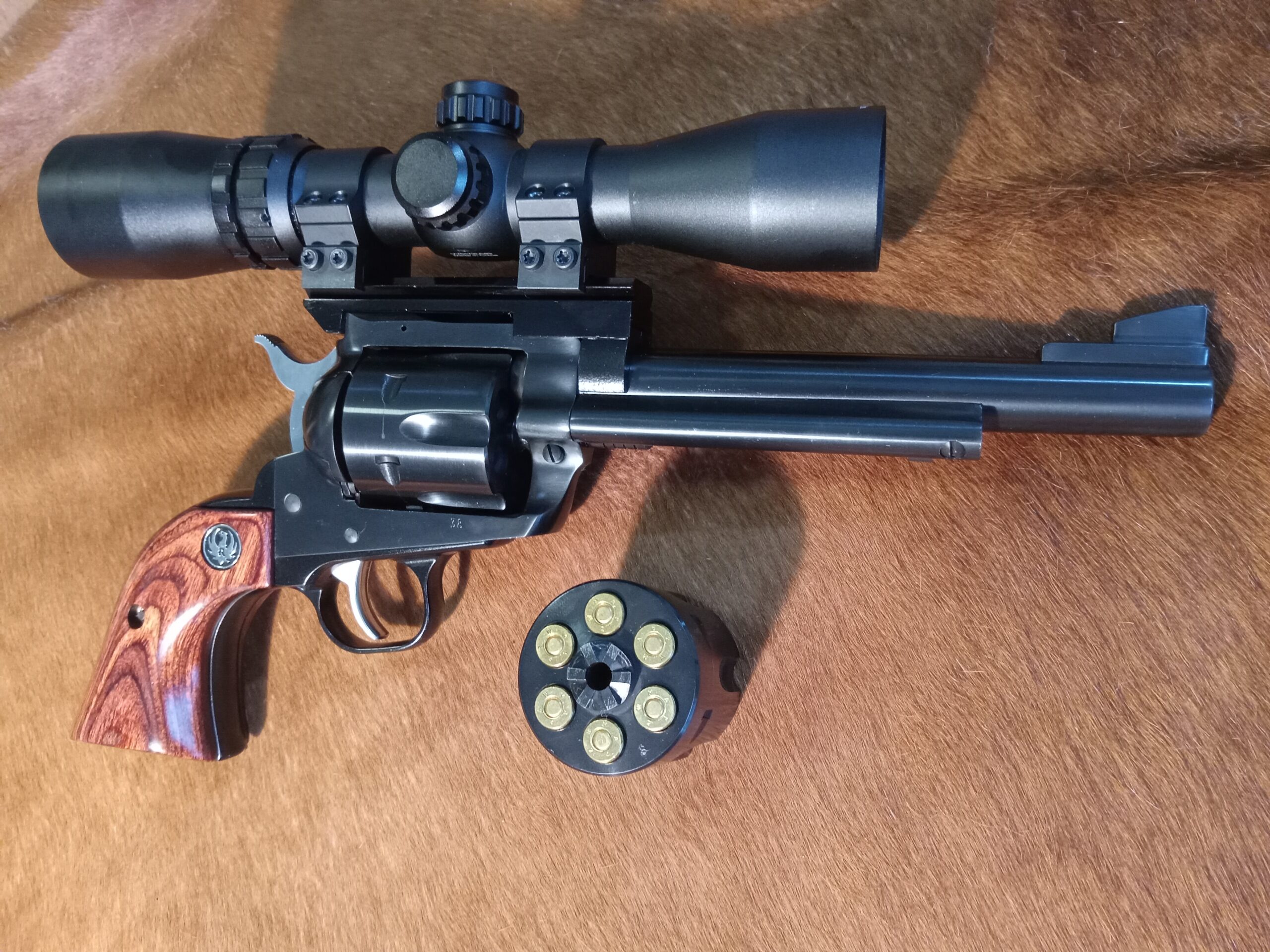
Searching the internet for any information about the Ruger New Model Blackhawk convertible 357/9mm invariably brings large amounts of forum posts where people mention accuracy differences when shooting 9mm Luger compared to the 357 Magnum in these guns. Should the people contemplating trading their hard-earned monies for one of these iconic guns be worried? After all, the appeal of being able to shoot the affordable and easy to find 9mm Luger becomes moot if that ammunition does not perform adequately in that gun.
Most of the forum posts on the matter begin with the original poster writing about his gun being very accurate when shooting 357 Magnum ammunition but performing poorly comparatively with the 9mm Luger. This usually perplexed, surprised, disgruntled or sometimes furious first post is then followed by a good number of participants sharing their respective experience.
This is where it becomes interesting. While some shooters relate poorer accuracy with the 9mm Luger, some see no significant difference between the 9mm Luger and 357 Magnum, and a few shoot the 9mm Luger more accurately. These follow-up posts may give the impression that there are three different types of these guns, each better suited for certain chamberings, as if there were three different assembly lines at the factory.
Since I have access to one of these guns, I figure I would set out to find some answers. It turns out, at least in my gun, it depends directly on the ammunition and how it behaves in the oversized throats of the 9mm cylinder.
The Gun
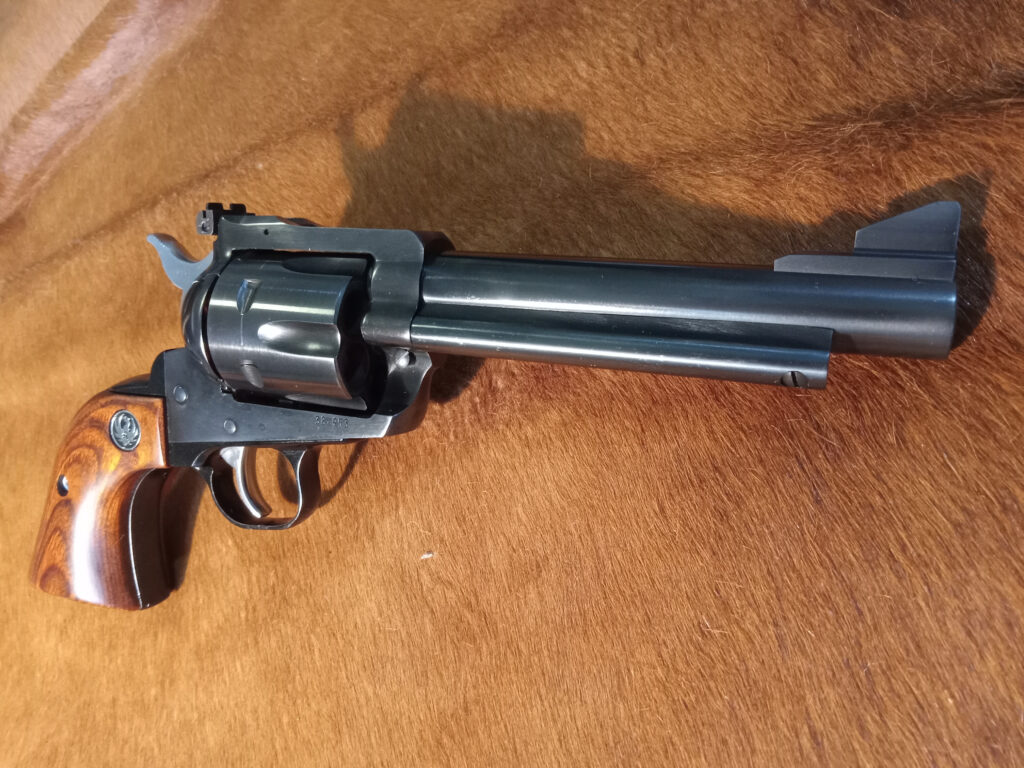
I purchased a New Model Blackhawk 357/9mm Convertible sometime during the post-pandemic gun craze. This silly period showed all of us seasoned or novice gun buyers how the market and its supply can easily be turned upside down for a long time. In such circumstances when ammunition and reloading components were in short and irregular supply, adding the option to fire the ubiquitous 9mm Luger to the 38 Special and 357 Magnum in a reliable, near indestructible package made a lot of sense to me.
While the shorter 5.5’’ and 4.62’’ stainless models would have been my top choice, I did not hesitate for long when a blued 6.5” model appeared in the glass case of my local gun store. If I had any reservations, its trigger was the best of all the Ruger Single Action I ever handled, and this sealed the deal. The cylinders locked tight. The 357 Magnum cylinder had no end shake at all, whereas the 9mm cylinder exhibited some noticeable amount of back-and-forth movement. This did not deter me, and I took the gun home, convinced I would not see another of these guns for a couple of years (I was right).
The Test
The experiment is simple: shoot groups with different ammunition in 357 Magnum and 9mm Luger through the Blackhawk Convertible and record groups size and velocities for each ammunition. The groups will serve as a gauge of how well the gun shoots these different munitions, and the velocities will not only tell how fast he bullets fly, but show any level of variation for each ammunition in that gun.
To compare the Convertible revolver’s accuracy (at least in 357 Magnum), I will also shoot groups with the same ammunition in a New Model Blackhawk Stainless in 357 Magnum which shares the same barrel length as the Convertible. If both guns as similarly accurate, it will show that the Convertible is as good as the 357 Magnum to start with, quelling any debate about their possible manufacturing differences.
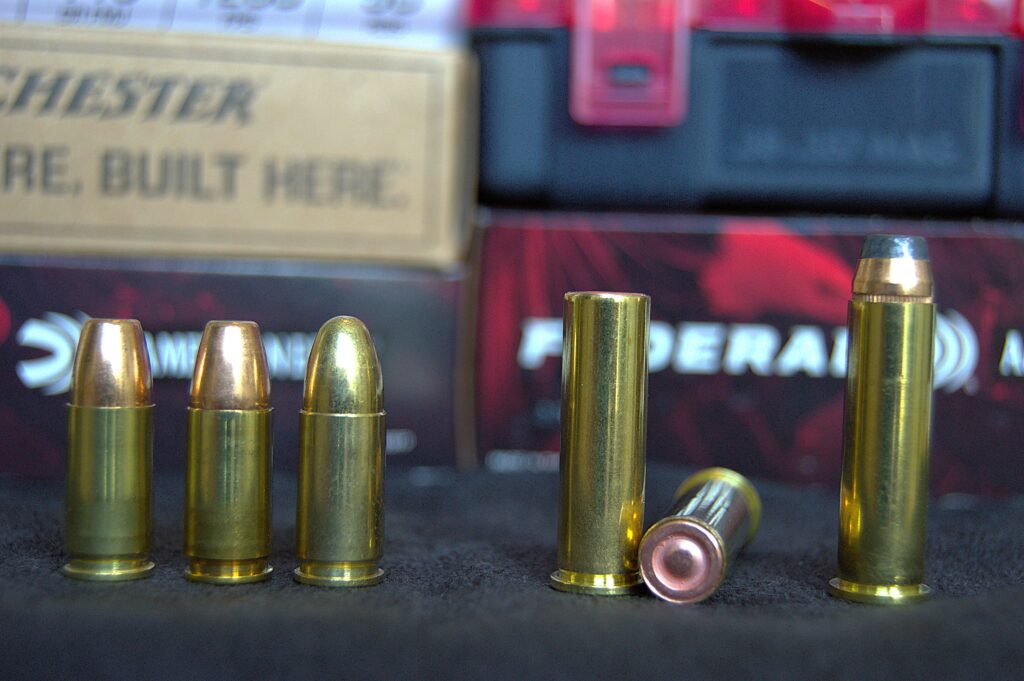
The following ammunition was used:
- 9mm NATO Winchester Target 115 grain FMJ flat point
- 357 Magnum Federal American Eagle 158 grain Jacketed Soft Point
- 357 Magnum handload, Berry’s Bullets 148 grain Double Ended Wadcutter, 4 of grains Hogdgon TiteGroup powder, CCI 500 primer, Starline brass (No OAL provided: this is not a handloading article and reloaders should work out their own loads safely without relying on information found on the internet other than from manufacturers. Always follow guidance from reputable manuals. One load that is safe in a gun may not be in another.)
- 9mm Luger Fiocchi Range Dynamics 115 grain Brass Jacketed FMJ
- 9mm Luger Fiocchi Range Dynamics 115 grain Copper Jacketed FMJ
- 9mm Luger Federal American Eagle 147 grain FMJFP
A Caldwell Ballistic Pro Chronograph connected to my cell phone was placed 10 feet away from the muzzle and collected all the velocity measurements.
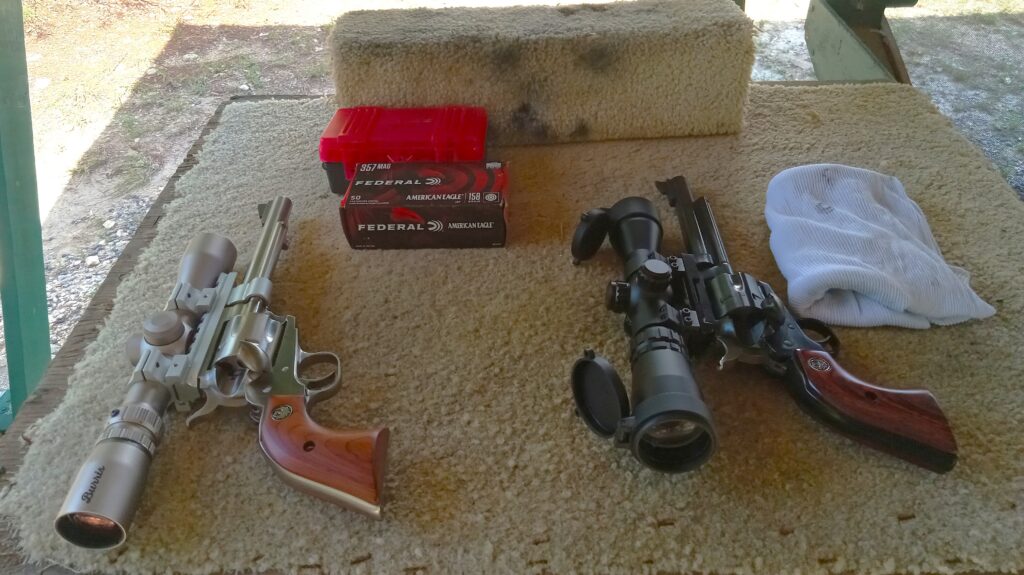
Blessed is the shooter who can shoot their handgun with iron sights at 50 yards and notice groups spread variation at that distance. Unlike the many internet braggarts and few real world, well-practiced shootists, I sure can’t myself. The revolvers were scoped, and the groups shot at 25 yards, which is the furthest I am allowed to shoot handguns at my local shooting range. Sandbags and supports were used to stabilize the revolvers during shooting.
The Blackhawk 357 Magnum/9mm Luger Convertible was topped with a Weaver 301 scope base on which I secured an UTG Leapers True Hunter 2-7x32mm handgun scope. The Stainless 357 Magnum Blackhawk was equipped with Burris 2-7x-32mm handgun mated to its frame by a Wieg-A-Tinny rail.
Results
I started the test shooting the two guns with the 357 Magnum ammunition, to establish an accuracy baseline and to confirm that the Convertible is as accurate as the 357 Magnum Stainless. To my relief, the two 357 Magnum loads showed similar levels of accuracy when shot in both guns.
The Stainless model shot 2.13” center-to-center groups with the Federal load and 2.26” with the handload. The Convertible shot the Federal load tighter with a 1.70” center-to-center group average but opened the handload group average slightly with 2.30”. This confirms that my Convertible is as accurate as its brethren, at least with these two loads. It also shows the guns’ fabulous accuracy potential, even in the hands of an average shooter like me. Could the 9mm loads approach or better this?
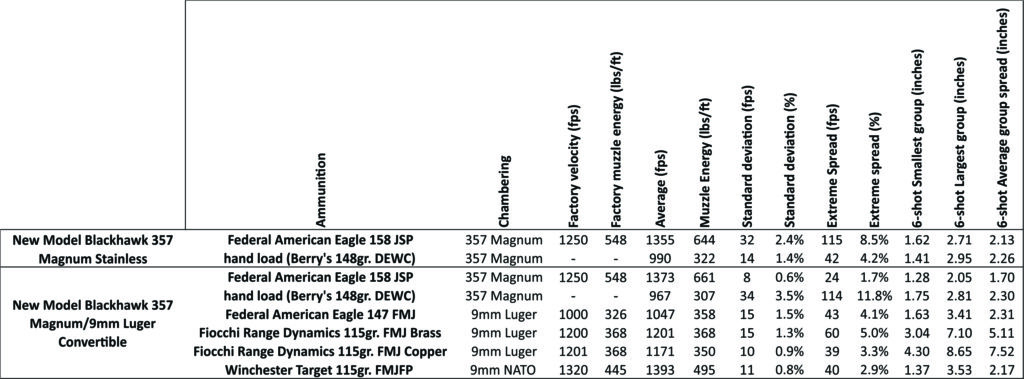
Things began well for the 9mm cylinder test. The Federal American Eagle 147 grain load printed an average of 2.31’’ center-to-center groups. The Winchester 9mm NATO 115 FMJFP Target loads was the most accurate with 2.17” center-to-center group average. The Fiocchi Range Dynamics 115 grain brass jacketed FMJ grouped poorly, with center-to-center averages reaching 5.11”. Furthermore, I experienced 11 pierced primers and 25 outflowing or severely flattened primers out of 100 rounds of this ammunition (no other pierced or flattened primers or were observed with any other brand). Interestingly, none of the pierced primers showed flattened edges.
This was a surprise to me, as all the Fiocchi Range Dynamics products I shot had been good at worst, and excellent at best, in all the guns I shot them in but the Convertible.
Reaching out to Fiocchi’s very helpful customer service to inquire about potential recalls (there were none), I was asked if I would be interested in running the same test with another lot of similar ammunition and looking for pierced primers or pressure signs. Jumping at the opportunity to shoot more and do more research, I enthusiastically agreed, and the representative generously sent several boxes of copper jacketed 115gr Range Dynamics FMJ made in the US (the first lot, brass jacketed, is manufactured in Turkey).
My patriotic self was ready to bet that the ‘Merican made ammo would do well. Sadly, I was wrong, and the US made Range Dynamics averaged an unexpected and dismal 7.52’’ center-to-center average (Note: this ammo does great in my other guns). The same primer issues were encountered, and through discussions with the representative, it was clear that this particular gun did not agree with the primers rather than there being a problem with the ammunition itself.
To summarize
This test showed that all posters were right… The Ruger Blackhawk Convertible is an inherently accurate gun. It is: 1) capable of excellent accuracy using 357 Magnum ammunition, and 2) some 9mm ammunition, both statements being mentioned in some of the forum posts. The test also showed that large accuracy differences are possible when using different 9mm ammunition, as it is also reported by many forum posters.
From this initial test, it seems the issue lies within the 9mm ammunition and how it interacts with the gun. There are a good number of mechanical factors which can influence these interactions in the Ruger Blackhawks. This beckons a deeper look into the different factors that could impact accuracy with the two different chamberings in these guns. This will be the topic of the next post: “The Curious Case of the Ruger Blackhawk 357 Magnum/9mm Luger Convertible Accuracy: the revolvers”