
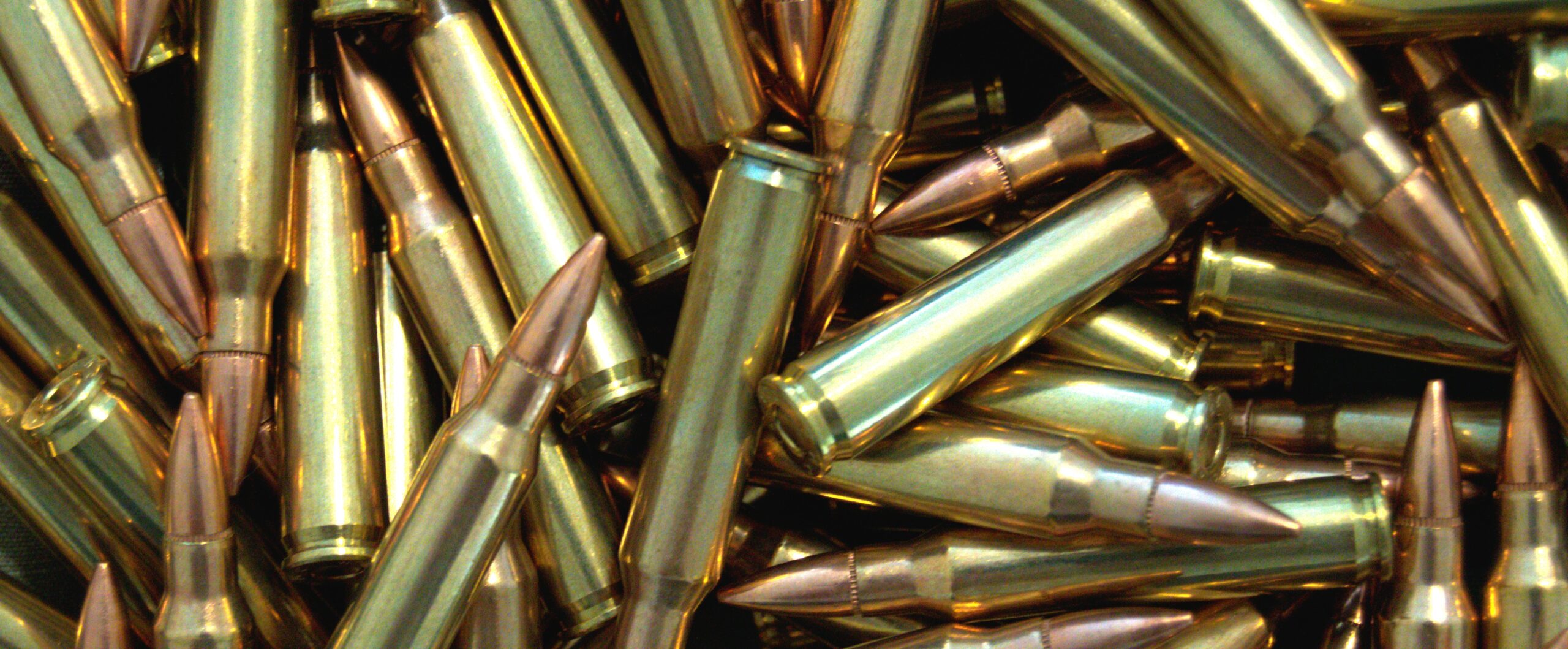
In this last post of this series, the bullet finally lands on target and we get to discuss what happens when a quick-spinning non-expanding bullet with a slight wobble hits a game animal. These antics are quite different from the behavior of regular hunting bullets, and knowing the difference is important if one decides to use military bullets for hunting.
Terminal ballistics
From the discussions in the previous posts, it is not the distance or speed that controls the chances of dramatic fragmentation of the FMJ bullet, but rather if it impacts slightly askew or straight on. Bullets that still have a bit if that tiny wobble will start yawing into the target shortly after impact and release their energy instantly. As the bullet’s side come in contact with the target’s tissues, it can break apart and fragment, especially if the jacket is thin and a cannelure is present. Stronger bullets will retain their integrity but will tumble.
Stabilized after a longer flight, the bullet may still veer off axis and yaw or fragment upon impact, but it may take longer to do so as the bullet will need to become unstable inside the target. At that point, the bullet may have already exited the animal, only leaving a temporary cavity and a rectilinear wound.
The magical distance that internet people claim limits the terminal efficiency of the FMJ loads does not come from a lack of energy preventing the bullet to fragment. Even the slowest loads shot from the shortest usable barrels have tremendous muzzle energy. For example, when shot from a 7.5’’ barrel, the M855 load has about 2300 fps of velocity and close to 730 lbs/ft of energy at the muzzle. That is 44 Magnum level, which is no small amount of energy. Imagine a 62 grain bullet spinning at 16,100 RPM and hitting with the force of a 730 lbs steel weight dropping from one foot, and expect the bullet to not come apart. This explains why there are some videos of such short barreled setups shooting that cartridge in ballistic gel with spectacularly destructive effects when the rest of the internet claims it should just whiz through in a straight line. At short distances, the bullet did not have time to stabilize, and hit the target with enough instability to quickly come apart.
This also explains why some higher end precision loads may not work as well at closer range when it comes to terminal ballistics. The problem with the initial wobble of the axis is that the bullet will have a higher drag than when its axis is stabilized. Uncontrolled amount of wobble is a problem for long distance shooting, as the effect of the higher drag will show more the further the impact. When the duration of the wobble is controlled and repeatable, this is not an issue, as the trajectory is known and predictable. For example, the regular range fodder Swiss GPat 90 has a minimum accuracy standard of 0.72 minute of angle (21mm at 100m), all that with the intentional factory set wobble.
The most accurate cartridges for long distance shooting receive special care so that the bullet is properly aligned with the bore axis. When shot from well-made rifles with properly machined and aligned chambers, the bullet axis’ wobble will be minimal and the cartridge and rifle combination accurate. When shooting such ammunition, the bullet will be stabilized before it reaches its intended target.
While this may not matter when shooting at paper, it does when shooting at an animal. This is why some forum contributors experience adequate terminal effects while hunting with affordable ball ammunition and some others are dismayed by the results of better quality and more expensive loads. The cheaper ammunition is not loaded with maximum precision in mind and will have a good amount of wobble to start with. These will take longer to stabilize, extending the range at which they will impact the intended target with some wobble compared to the higher end offerings which stabilize faster.
Military loads and hunting
When it comes to hunting, the use of means of harvest that are not best suited to the pursuit and more likely to injure game, create unnecessary pain and/or possible game loss is to be avoided for moral and practical reasons. As a hunter, I find using suboptimal bullets ethically debatable to say the least, as we owe the game a quick death. There are specifically designed bullets for the task, and it is always good practice to “bring enough gun”.
However, the skill and limitations of the hunter must be factored in as well. Some people will ethically and confidently harvest large animals with what seems underpower means whereas other will have poor results even if they “bring enough guns”. The ethical aspect of using military loads for hunting will not be debated here. Maybe all one can accurately shoot or afford to shoot is a .223 Remington/5.56×45 NATO rifle.

That said, there is no reason to shun certain types of loads (where legal) if they yield the desired results repeatably as long as the hunter knows and abides by the limitations of the rifle and cartridge combination. One word, though: don’t be that guy who claims to be taking neck shots at 600 yards. Unless you are a trained marksman (and then, still), you are just either a braggart or an unethical hunter and regardless, you bring bad attention to the rest of the hunting community.
If a hunter can only hunt with military loads, it is especially important for them to select their ammunition in function of the game and distance they are expecting to encounter. When hunting for the pot, special care should be taken to wait for a good shot opportunity. As the military projectiles are not designed to behave as consistently as hunting bullets, they may release their energy in short order and not penetrate deep enough to incapacitate an animal quickly enough for recovery on a poor shot. Shots should be kept to broadsides or slightly quartering away shots. Facing, steeply angling shots, and Texas heart shots are to be avoided: these bullets may not penetrate deep enough.
On this topic, hunters would do well keeping in mind that the military loads will ruin larger volumes of edible meat when compared to hunting-specific bullets. This is due to the wounding mechanism linked to their development. Upon fragmenting, they will send bits of lead and jacket of all sizes all throughout the wounding cavity in all sorts of trajectories and at unexpected depths. Unless the shooter aims to dispatch a nuisance or threatening animal that will not see the table, hunters should avoid any shot other than the lung and heart area where the damage to the meat will be limited.
To conclude…
When it comes to hunting and all ethical debates aside, “military” loads will indeed put animals down, as good as they have reduced enemy combatants’ will to fight into a red mist for decades. The key is to choose the type adequately, and keep the distance and shot placement in mind. Also, remember to keep the humane aspect at the forefront and remember that too many people do not see hunting with kindness. Let’s not give the anti-hunter the proverbial ammunition against us by behaving poorly. We owe it to the game and our fellow ethical hunters.